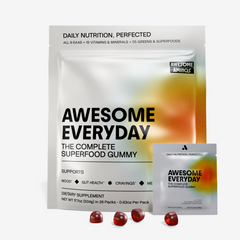
You scoop the greens powder into your shaker, chew through the kale salad, or grab the gummy that promises a garden’s worth of vegetables. Getting your greens in feels like a win, and it is. But lately you keep seeing the word “fermented” on labels and in health conversations, and you’re wondering whether it actually matters or if it’s just the latest buzzword.
It matters, and the reason is more interesting than most labels explain.
The short answer: The main benefits of fermented greens are easier absorption, easier digestion, and gut support. Fermentation breaks down plant compounds that block mineral absorption, starts breaking proteins into free amino acids, and creates foods linked to a more diverse gut microbiome. It isn’t magic, though. Some nutrients, like vitamin C, can drop during fermentation, which is why the real benefit is how usable the nutrients are, not how many there are.
In this blog, we’ll explore what fermented greens are, what actually changes during fermentation, what fermentation doesn’t do, the real benefits of fermented greens, how they compare to raw greens, simple ways to add them to your day, and where Awesome Everyday™ fits.
What Are Fermented Greens?
Fermented greens are leafy greens and green vegetables, like cabbage, kale, spinach, and broccoli, that have been broken down by beneficial microbes, usually lactic acid bacteria, before you eat them. If you’ve had sauerkraut or kimchi, you’ve already eaten fermented greens. Both start as cabbage.
During fermentation, these bacteria feed on the natural sugars in the plant and produce lactic acid. That lowers the pH, preserves the food, and changes its chemistry in ways that affect how your body handles it. Fermented greens can be eaten as whole foods or dried into powders and used in supplements.
What Actually Changes During Fermentation
Fermentation doesn’t just preserve greens. It transforms them. Here’s what the research shows changes:
-
Anti-nutrients go down. Plants naturally contain phytates and tannins that bind to minerals like zinc and iron. Microbial fermentation reduces these compounds, which results in greater bioavailability of vitamins and minerals.
-
Proteins become easier to digest. A 2022 study in Scientific Reports explains that during fermentation, microbial enzymes partially break down plant proteins and increase the levels of peptides and free amino acids, which makes the protein more digestible.
-
Some compounds increase. In that same study, fermented carrots and peppers had more vitamin A and carotene than raw ones, and bacteria involved in fermentation can produce certain B vitamins.
-
Unwanted compounds can drop. The researchers also found lower levels of heavy metals like lead and cadmium in all of the fermented vegetables they tested.
Put simply, fermentation does part of the digestive work before the food reaches you.
What Fermentation Doesn’t Do
Fermented greens aren’t automatically better in every way, and it helps to know the trade-offs. The same Scientific Reports study found that fermentation reduced vitamin C, by up to 50% in some vegetables, along with some minerals and plant phenols. Traditionally fermented vegetables can also be high in sodium because of the salt used in the brine.
So why do nutritionists still see fermentation as beneficial? Because total content and usable content aren’t the same thing. A raw green may contain more of a nutrient on paper, but if anti-nutrients are holding on to it, your body can’t use all of it. Fermentation trades a little of the total for more of what’s actually available.
The Benefits of Fermented Greens
Here’s what fermented greens offer that raw greens don’t:
-
Better mineral absorption. With fewer phytates and tannins, minerals like zinc and iron are easier for the body to absorb.
-
Easier digestion. Proteins and complex compounds are partly broken down before you eat them.
-
Gut microbiome support. In a Stanford Medicine study, healthy adults who ate a diet high in fermented foods, including kimchi and other fermented vegetables, for 10 weeks showed greater gut microbiome diversity, with stronger effects from larger servings.
-
Longer shelf life and nutritional value. Harvard Health notes that fermentation boosts both a food’s shelf life and its nutritional value, which is why cultures around the world have relied on it for centuries.
Fermented Greens vs Raw Greens: Side by Side
|
Raw Greens |
Fermented Greens |
|
|---|---|---|
|
Anti-nutrients (phytates, tannins) |
Present |
Reduced |
|
Mineral absorption |
Can be limited by anti-nutrients |
Easier to absorb |
|
Protein |
Intact plant proteins |
Partly broken into peptides and free amino acids |
|
Vitamin C |
Higher |
Can be lower |
|
Gut support |
Fiber feeds gut bacteria |
Linked to greater microbiome diversity |
|
Shelf life |
Short when fresh |
Longer |
Both have a place in a healthy diet. Raw greens bring fiber and fresh vitamin C. Fermented greens bring nutrients in a form your body can use more easily.
Easy Ways to Add Fermented Greens to Your Day
You don’t need to start fermenting cabbage on your kitchen counter. A few simple options:
-
Add a spoonful of sauerkraut or kimchi to eggs, grain bowls, or sandwiches.
-
Choose refrigerated, unpasteurized ferments when you want live cultures, since shelf-stable versions are often heat-treated.
-
Check the sodium on store-bought ferments, especially if you eat them often.
-
When comparing greens powders or greens gummies, look for the word “fermented” on the label. If it isn’t there, the greens are likely raw and dried.
Greens Are the Support. Essential Amino Acids Are the Foundation.
Fermented greens are a great supporting layer, but greens alone aren’t complete nutrition. Essential amino acids are nutrients the body cannot make on its own, so they need to come from food and daily nutrition. The body uses them as building blocks for proteins and for everyday normal functions involved in mood, focus, energy, and recovery.
Most greens powders and greens gummies focus on vitamins, minerals, and plant ingredients and leave essential amino acids out. It’s not greens instead of amino acids. It’s greens with amino acids. That combination is what supports Essential Daily Nutrition™.
FAQs
What Are the Benefits of Fermented Greens?
Fermented greens can be easier to absorb and digest. Fermentation reduces anti-nutrients that block minerals, breaks proteins into free amino acids, and creates foods linked to greater gut microbiome diversity.
Are Fermented Greens Better Than Raw Greens?
Not better in every way. Fermented greens offer more usable nutrients and gut support, while raw greens keep more vitamin C. Eating both is a great approach.
Do Fermented Greens Lose Nutrients?
Some. Vitamin C and certain minerals can drop during fermentation, but the nutrients that remain are often easier for the body to absorb.
Do Fermented Greens Contain Probiotics?
Only if they still contain live cultures. Refrigerated, unpasteurized ferments often do. Dried or heat-treated fermented greens may not, so fermented doesn’t automatically mean probiotic.
Are Fermented Greens Enough for Daily Nutrition?
Not on their own. Greens don’t provide all 9 essential amino acids, which the body needs every day and can’t make by itself.