You add spinach to the morning smoothie, toss berries on the yogurt bowl, and pick the supplement with the longest list of fruits and vegetables on the back. It feels like you’ve covered the basics. But what you eat and what your body actually absorbs aren’t always the same thing. If you’ve ever wondered whether your greens are really pulling their weight, you’re asking exactly the right question.
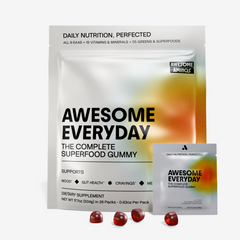
That gap between what you take in and what your body can use is called bioavailability. It’s the reason we ferment the superfoods in Awesome Everyday™ instead of using them raw.
The short answer: Fermented superfoods can be easier for the body to absorb. Fermentation breaks down natural plant compounds that hold on to minerals, makes antioxidants more available, and starts breaking proteins down into amino acids. More of what’s in the food becomes available to you.
In this blog, we’ll explore what fermented superfoods are, why raw plant foods aren’t always fully absorbed, what changes during fermentation, fermented greens vs raw greens, how fermentation relates to gut health, why absorption matters most for essential amino acids, and where Awesome Everyday™ fits.
What Are Fermented Superfoods?
Fermented superfoods are fruits, vegetables, and other nutrient-dense plant foods that have been broken down by beneficial microbes, most often lactic acid bacteria, before you eat them. It’s one of the oldest ways people have prepared food. Kimchi, sauerkraut, miso, tempeh, and kefir are all familiar fermented foods.
Fermentation started as a way to preserve food, but it does more than keep food fresh. Harvard Health notes that this age-old process boosts both a food’s shelf life and its nutritional value. A 2025 scientific review of fermented fruits and vegetables describes how these microbes transform plant foods into more bioactive, nutrient-rich forms.
Why Raw Superfoods Aren’t Always Fully Absorbed
Plants protect themselves with natural compounds, sometimes called anti-nutrients. Two of the most common are phytates and tannins. They aren’t harmful in everyday amounts, but they bind to minerals like zinc and iron and make them harder for the body to absorb.
That’s why a long ingredient list doesn’t automatically mean complete nutrition. A label can list dozens of greens, fruits, and vegetables, and the body may still be able to use only part of what’s there. More ingredients isn’t the goal. More usable nutrition is.
What Fermentation Changes Inside Your Superfoods
Fermentation changes the food before it ever reaches you. Here’s what the research shows:
-
Fewer anti-nutrients. Microbial fermentation reduces or neutralizes tannins and phytates, which results in greater bioavailability of vitamins and minerals.
-
More available antioxidants. As those anti-nutrients break down, plant polyphenols that were bound to them are released, increasing antioxidant potential.
-
Proteins start breaking down. During fermentation, plant proteins are broken down into amino acids and bioactive peptides, simpler forms the body can work with.
-
Enzymes do some of the work first. Fermentation activates enzymes that pre-digest complex compounds, so your digestive system has less to do.
Put simply, fermentation does part of the breaking down for you.
Fermented Greens vs Raw Greens: What’s the Difference?
Most greens powders and greens gummies use raw, dried fruit and vegetable powders. On the label, those can look almost identical to fermented ingredients, which is why it helps to read closely.
Raw greens still offer real nutrition. Fermented greens have simply gone one step further, with some of the anti-nutrients broken down and some of the nutrients already in a more usable form. When you compare superfood gummies or daily nutrition supplements, look for three things on the label: whether the plant ingredients are fermented, whether essential amino acids are included, and how simple the daily serving is to keep up with.
Fermented Ingredients and Gut Health
Your gut is where absorption happens, so supporting it is part of the picture. A few gut-related terms often get mixed up:
-
Fermented ingredients are foods that have been transformed by microbes to make their nutrients easier to use.
-
Probiotics are live beneficial bacteria. Not every fermented ingredient contains live cultures, so fermented doesn’t automatically mean probiotic.
-
Prebiotics are fibers and plant compounds that feed the beneficial bacteria already living in your gut.
-
Digestive enzymes help break food down into nutrients the body can absorb.
Each plays a different role. Together, they support a gut environment that can make better use of the daily nutrition you give it.
Why Absorption Matters Most for Essential Amino Acids
Superfoods are a great supporting layer, but they aren’t the whole nutritional foundation. Essential amino acids are nutrients the body cannot make on its own, so they need to come from food and daily nutrition. The body uses them as building blocks for proteins and for everyday normal functions involved in mood, focus, energy, and recovery.
Vitamins and minerals help the body run its processes. Essential amino acids are some of the raw materials those processes work with. It’s not amino acids instead of vitamins. It’s amino acids with vitamins. And absorption matters most when what you’re absorbing is what your body actually runs on.
Food always comes first. Eggs, dairy, fish, poultry, soy, quinoa, and beans with rice are all good sources of essential amino acids. But busy schedules make consistency harder, and that’s where a simple daily habit can help support Essential Daily Nutrition™.
FAQs
Are Fermented Superfoods Better Absorbed Than Regular Ones?
They can be. Fermentation reduces anti-nutrients like phytates and tannins that bind minerals, which research links to greater bioavailability of vitamins and minerals.
What Are Fermented Greens?
Fermented greens are leafy greens and vegetables broken down by beneficial microbes before being dried or used, so their nutrients are easier for the body to access.
Are Fermented Vitamins Better Than Regular Vitamins?
Fermentation can make the nutrients in plant ingredients easier to absorb. How much difference it makes depends on the ingredient and the process, so read the label and look for brands that explain how they ferment.
Is Fermented the Same as Probiotic?
No. Fermentation is a process that changes food. Probiotics are live bacteria. A fermented ingredient isn’t automatically a probiotic.